Cash Flow Planning for Life – Lessons from 30+ Years on the Front Lines - Podcast Episode 001
Mark and Charly break down why managing cash flow is essential not just for business success, but for personal peace of mind too!
Mark Makara
4/1/20263 min read
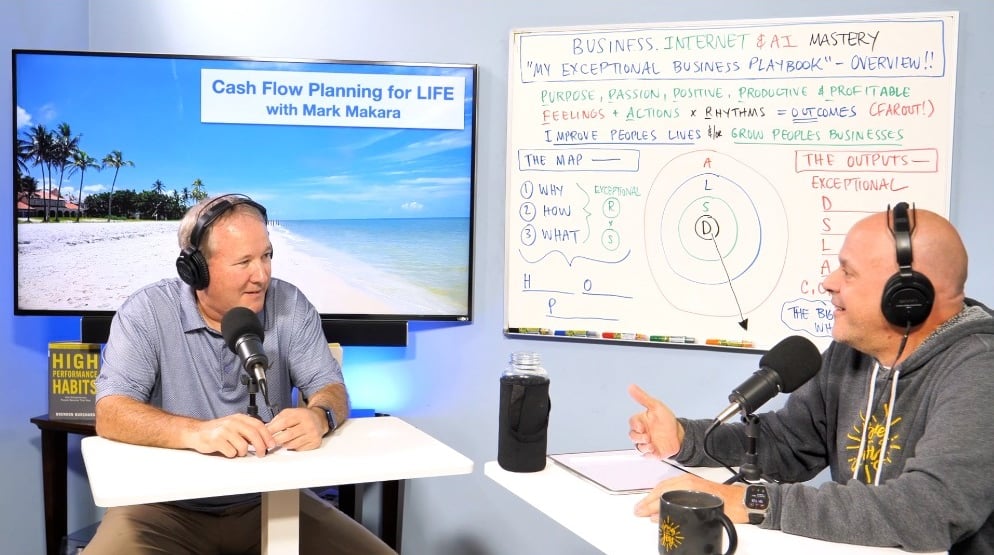
Welcome to our brand new "Cash Flow Planning for Life" Podcast!
In this episode, my good friend, Charly (or Double-C, as I call him), and I sit down and review the basics of our philosophy for living your BEST life!
Here's some of the key principles, philosophies and thoughts I share:
I’ve been doing this for over 30 years, and it all comes down to one thing: cash flow. That’s why I do what I do. Numbers have always been a puzzle to me. My dad saw it when I was in fifth grade. It’s not science — it’s an art. You take the rules and you figure out how to make them work for the real situation in front of you.
Tax law is generic. It doesn’t apply the same to every person or every business. That’s where most accountants miss it. I dig into the details, the procedures, and the actual circumstances so we can apply it the right way. I don’t just want to save taxes — I want to put real cash in your pocket that stays there when times get tough.
Buying a big truck or a fancy house just for the tax write-off has never made sense to me. Sure, you get the deduction, but now you’ve got insurance, maintenance, licenses, and debt payments sucking cash out every month. When the downturn hits — and it always does, whether it’s 2008, COVID, or whatever comes next — that extra debt is what kills businesses. I’ve watched too many good companies close their doors because they had no cash left.
Cash is king. Always has been. You’ve got to watch both sides every single day — money coming in and money going out. Maximize the inflow, minimize the outflow. Look at every check you write and ask: Can I reduce this? Sometimes you can’t change a lease today, but you sure better be planning for when it’s up.
Small changes add up fast. Cut $3 a day, $85 a month, or $255 a quarter and that’s $1,000 a year back in your pocket. Renegotiate insurance every year. Skip the Starbucks run and make your own coffee. Those little wins matter when you stack them over time.
You need reserves. Three months, six months — whatever fits your business. Because when revenue drops 30%, 50%, or more, the bills still come due on the first of the month. The companies that survive are the ones that kept cash on hand instead of tying it up in stuff they didn’t really need.
Look at your balance sheet. Assets minus liabilities equals your net worth. Positive cash flow builds that balance sheet over time. Increase assets, reduce debt. Most people stare at their P&L and ignore the balance sheet — that’s a mistake. If the balance sheet is clean, the income statement usually takes care of itself.
Tax planning isn’t something you do in the current year. I’m already looking at 2026 and beyond for most clients. You explore every option — timing equipment purchases, Section 179, bonus depreciation, electing in or out — whatever puts the most cash in your pocket, not just the biggest deduction on paper.
I’ve learned the hard way and watched others learn it too: get rid of the dead weight early. Broken equipment, unnecessary trucks, negative employees — cut it loose. Good teams will step up and take a pay cut together before they let someone get laid off. Bad attitudes? They gotta go first.
I don’t advertise. Never have. My business comes from word of mouth. Friends first, then business. You deliver real value, you answer questions honestly, you help people before they even ask — that’s how you build trust that lasts decades.
For the right clients — usually small to medium businesses doing five to thirty million in revenue — I act as that extra set of eyes. I ask the questions they don’t think to ask. “Do you actually need this right now?” “What happens if revenue drops?” “Have you run the full cost, not just the purchase price?”
AI is coming fast. If you’re not looking at how it can help your business — whether it’s content, automation, or even tax prep down the road — you’re going to get left behind. It’s not perfect yet, but it’s moving.
Bottom line: This isn’t a sprint. It’s a journey. You’ve got to stay dedicated. Review your spending regularly. Build your cash reserves. Keep your balance sheet strong. Make decisions based on cash flow, not on what saves the most taxes on paper.
Do the work consistently, year after year, and the results compound. That’s how you build something that lasts — for your business and for your life.
That’s Cashflow Planning for Life in a nutshell. Simple, but most people don’t do it. The ones who listen and actually follow through? They’re still here when others aren’t.
Let me know if you have any questions, comments, or believe we can help you create, build and sustain "Cash Flow for Life!"
Mark